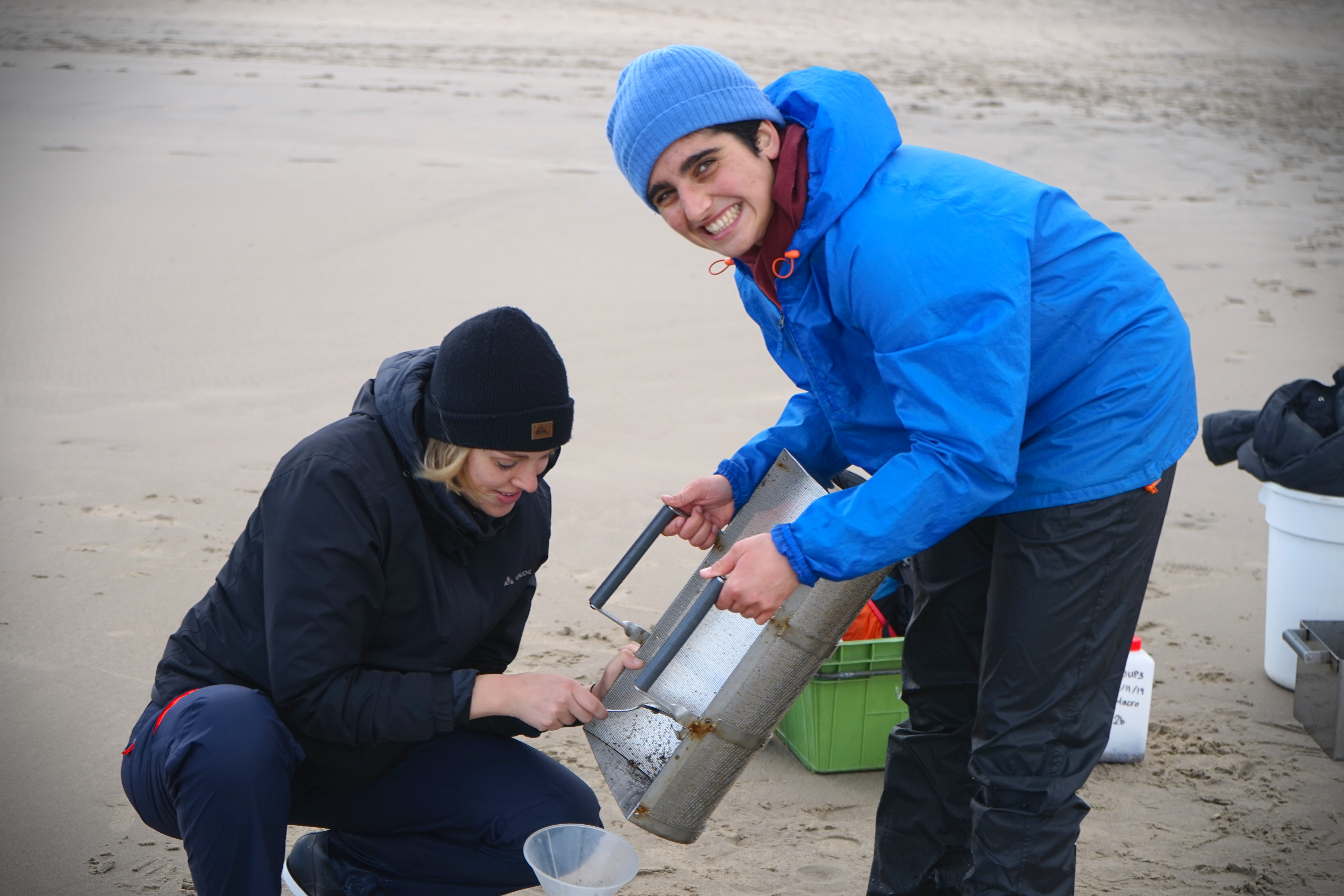
Methods in Experimental Marine Ecology
The course deals with baseline aspects of experimental approaches from ecological concept over experimental design and up-to-date experimental techniques to limitations of an experiment and critical interpretation of its outcome. At the end of the course, we expect students to have a critical vision on the experimental toolbox available for marine ecological research.
Course contents
Marine ecological conceptual theories (biodiversity-ecosystem functioning, …), experimental design and relevant statistics, ethics and legal framework (Nagoya protocol, …), biosafety levels for experimental lab, lab techniques (aquarium techniques, sensors, fluorescence-based measurements…), correct notation and critical interpretation of protocols, culture collections, scaling an experiment (from micro- to mesocosm), sensors (Arduino sensor development, use of optodes, (micro) electrodes, discussion of field experiments in different habitats (intertidal, subtidal, deep sea), limiting factors of an experiment. The practical part of this will include hands-on sessions and visits to Belgian partner labs of the European Marine Biological Resource Centre (EMBRC) network to get acquainted with up-to-date infrastructure and culture collections: bijv.Marine Biology (UGent), Protistology and Aquatic Ecology (UGent), Laboratory of Microbiology, Department of Biochemistry and microbiology (UGent), Aquaculture (UGent) and Flanders Marine Institute (VLIZ, Marine Station Ostend).
Final competences
- Students should have a good overview of the available up-to-date lab techniques to setup experiments and should develop a critical vision on this experimental toolbox.
- To get an overview of the available techniques to design an experiment and to learn how to make optimal use of these up-to-date techniques
Further course information can be found here: https://studiekiezer.ugent.be/2026/studiefiche/en/C003892